Reading time - 6 minutes
As promised, I will continue Brazil’s blog with Sao Paolo and Iguaçu Falls.
Spending a couple of days in Rio was simply amazing, but I had to see more of this wonderful country. So here we are, landing in Sao Paolo with GOL airlines, on a rainy evening. We had 2 nights accommodation at Radisson Paulista (160 euro with breakfast included). The hotel is nice and located near Avenida Paulista.


The next day we woke up as early as we could and started exploring the city.
If you are in the neighborhood, you can’t go wrong visiting the SESC 17th floor observation deck. It gives you breathtaking sights of the downtown São Paulo and Avenida Paulista. Take the A elevator which takes you up directly to the 17th-floor deck. Entrance is free, so just walk in and look for elevator A.

Second stop was Vila Madalena (we took an Uber from the hotel to Vila Madalena). It is a small neighborhood with amazing graffiti walls. We’ve spent a couple of hours around that area and then checked a nearby place, called Bar Samba, where you can dance the samba and eat great food all day long.


The second part of the day was filled in by a chill walk in the Ibirapuera Park, which is recognized as the most visited park in South America, and is compared to “a green oasis at the heart of a concrete jungle”. We walked back from the park to our hotel and frankly, we felt safe the entire time.


The second day was spent exploring Avenida Paulista, which has been closed to traffic since late 2015 and open to pedestrians every single Sunday. One day per week, a busy, high-traffic, 6-lane-road noisy street gets transformed into a peaceful, open promenade.


Interesting facts about Sao Paolo, this AMAZING concrete jungle:
– São Paulo is the largest city in Brazil and South America with a population of more than 12 million people;
– The Japanese community of São Paulo is the largest settlement of Japanese outside of Japan;
– The city has the 3rd largest concentration of skyscrapers in the world behind New York and Hong Kong and the largest building in São Paulo and also of Brazil is the Mirante do Vale, which is 170 meters in height and was opened in 1960;
– In 2006, São Paulo’s mayor, passed the “Clean City Law,” outlawing the use of all outdoor advertisements, including on billboards, transit, and in front of stores. Also, we’ve noticed that Sao Paulo is a very, very clean city.
– Due to the congestion in São Paulo, it can be hard and time-consuming for the wealthy to get around and this is probably why the city has the largest number of helicopters of any city in the world with around 2000 flights per day taking place;
– The famous racing driver Ayrton Senna was born in São Paulo;
– SP has the highest GDP of Brazil and South America and ranks 10th in the world list;
– SP is capital for events and hosts approx. 90,000 events per year. That is an event nearly every 6 minutes!


It’s time to move on to our next sweet spot in our journey with our story and the journey, so here we are, again at the airport, boarding Avianca Brasil for a short flight to Foz do Iguaçu.
FOZ DO IGUAÇU
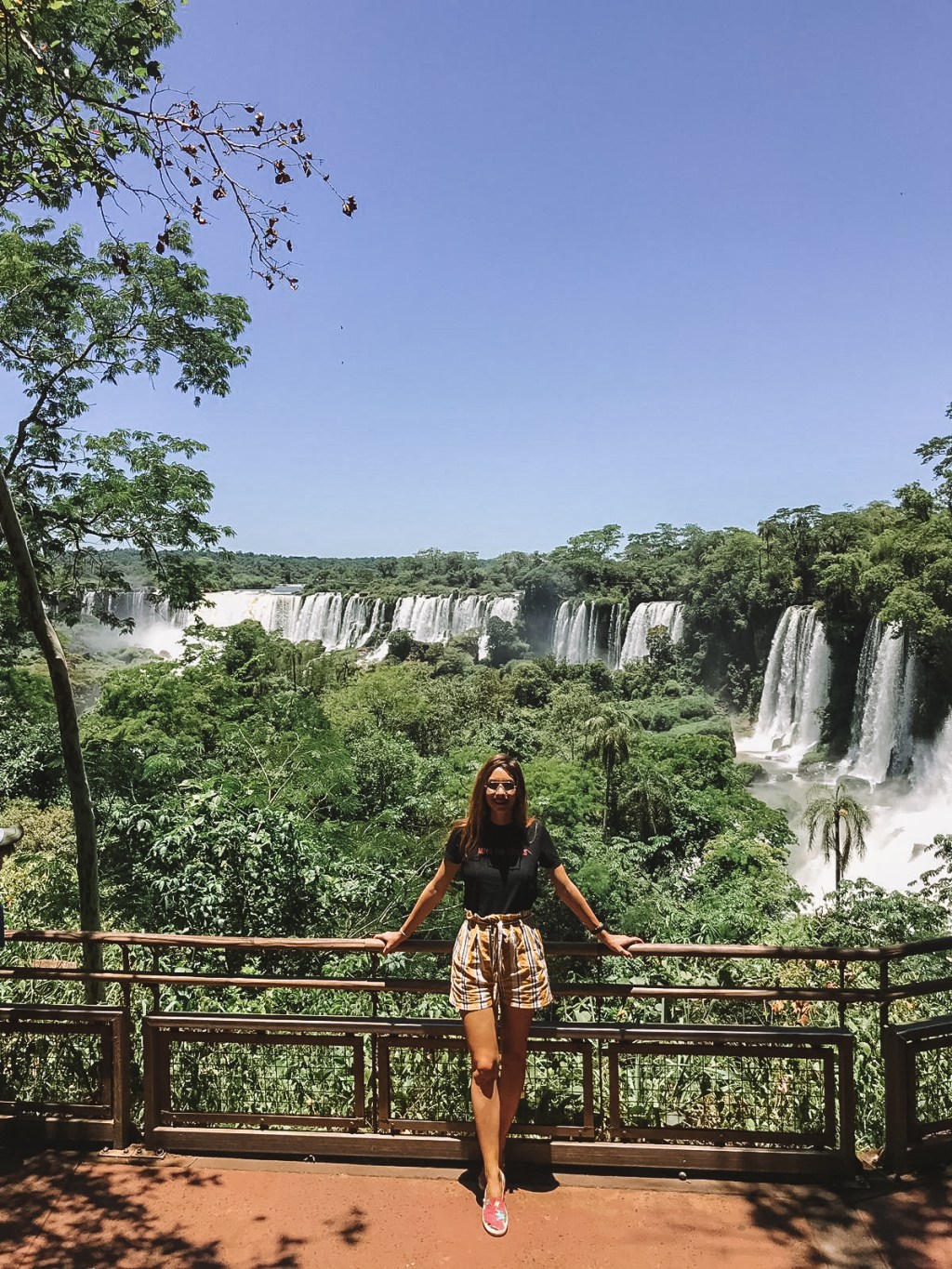
Visiting Niagara a couple of years ago, made me want to visit more waterfalls and Iguaçu Waterfalls was on the list since they are second only to Victoria Falls in size. However, in terms of beauty, none of the other waterfalls in the world can come close to compete (this is what they say and I must agree) Iguaçu falls, also Cataratas do Iguaçu in Portuguese and Cataratas Del Iguaçu in Spanish are waterfalls that straddle between the Brazil and Argentina. Both parts can be visited and both are incredibly beautiful. The Falls form a part of the border between Brazil and Argentina. Once those boundaries were clearly defined, two separate national parks have been created, one in each nation. Iguaçu National Park in Argentina was established in 1934 and Iguaçu National Park of Brazil was established in 1939. Together, they make up the largest waterfall system in the world, with more than 275 waterfalls.
But let’s take it step by step.
Day 1
Our hotel choice was San Juan Hotel, located 5 minutes away from the Foz do Iguaçu International Airport and very close to the entrance of Iguaçu National Park of Brazil.


My recommendation is to start with the Brazilian park and continue on the Argentinian side the next day.
Iguaçu National Park of Brazil opens at 09:00 am until 17:00 pm.
The ticket can be purchased on the spot or you can pre-pay your entrance online – 74 Brazilian real – buy tickets here.
Inside both parks, you can pay for everything by card.
The Brazilian side is great and you don’t need a full day to explore it. The impact of seeing the falls for the very first time was quite unique. Nature is truly amazing.


After exploring it, right outside the entrance is the Birds Park (Parque das Aves). Price – R$ 45,00 per person and can be visited from 8:30 AM to 5:00 PM. Plenty of extraordinary birds, going directly through the cages in most cases so you are exceptionally close to the birds. You cannot miss this.


Day 2
Similar to the Brazilian entrance, the Argentinian entrance fee is determined by your residency. Argentine residents have the cheapest entrance, followed by nationals of the Mercosur countries. The rest of the world pays a higher fee – 700 Argentinian pesos. The train to the devil’s throat is included, but the park entry does not include the boat rides which are operated by a private company. We paid around 50 euro for the boat tour and it is definitely worth it. You will get an absolute soaking with above-average doses of adrenaline.


Both sides have excellent national park infrastructure in terms of pathways, train/shuttles, cafe/snack bars, toilets.
Once you get in, the best way is to start with the end of the park, aka “The Devil’s Throat”.
You can then continue with the upper and lower side. The boat tour is something I would leave for the end of the day.
And now remember that upon seeing Iguaçu, the United States First Lady Eleanor Roosevelt reportedly exclaimed, “Poor Niagara!”
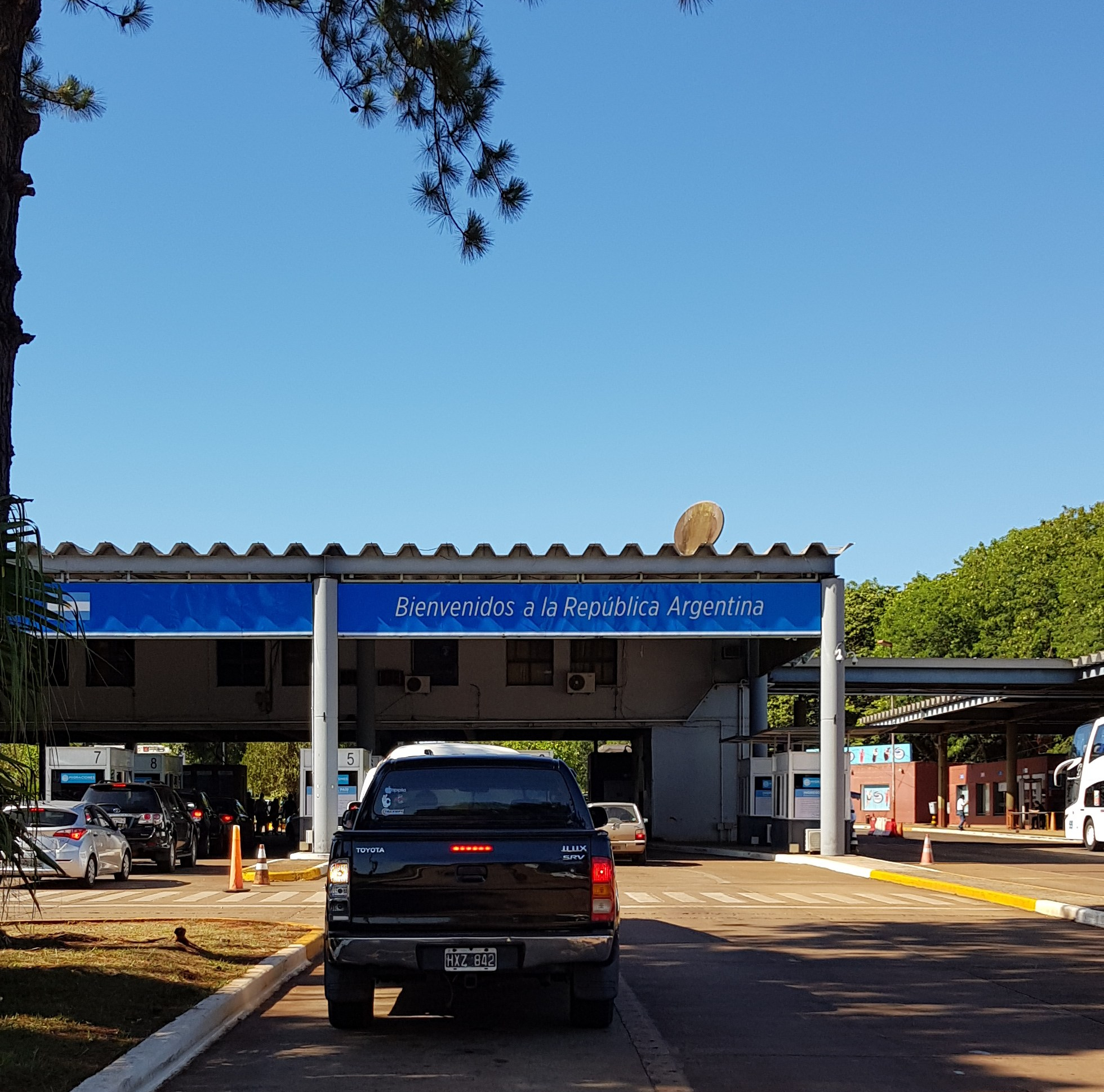
It’s all fun and games until you want to cross the border from Argentina back to Brazil, but you find out that you had to stamp your passport once entering Argentina and you didn’t. No stamp = not leaving the country, as you are counted in as an illegal immigrant.
It gave me some heartaches for a couple of loooooong, long minutes, but in the end, after explaining 3 times that we crossed the border walking, we were allowed to go back to Brazil, promising that in the next few days we will not return to Argentina.
Another point of interest in that area is the meeting point of 3 countries: Argentina, Brazil, and Paraguay. There are observation decks in Brazil and Argentina. I would recommend seeing the one on the Brazilian side, as it is more attractive.


Are the falls worth it? YES, yes and yes. If you have the chance to visit Brazil or Argentina, make sure to add Iguaçu waterfalls on the top of your list.
This is a memory of a lifetime.
USEFUL INFORMATION:
– make sure you stamp your passport once you enter Argentina or Brazil. You’ll understand why I am mentioning it.
– use taxi/uber to get around
– use mosquito spray
– do not feed the animals, at all


 Theography
Leave a comment